
Ceramides in K-Beauty: How They Repair the Skin Barrier and Lock in Moisture

What it is
Ceramides are a family of waxy lipid molecules that make up roughly 50% of the stratum corneum's intercellular matrix. They form lamellar bilayers between corneocytes (dead skin cells), creating the waterproof barrier that prevents water loss and blocks irritants. Human skin contains at least 12 ceramide subclasses. In skincare, synthetic pseudo-ceramides and plant-derived ceramides (from rice, wheat, or konjac) replenish depleted lipid layers. Ceramide content in the skin decreases approximately 30% between ages 20 and 40.
How it works
Topically applied ceramides integrate into the intercellular lipid lamellae of the stratum corneum. They fill gaps in the mortar-and-brick structure where corneocytes are bricks and the lipid matrix is mortar. This restores the barrier's ability to retain water and resist penetration by irritants and allergens. Ceramides also signal keratinocytes to differentiate properly, which normalizes the skin's own barrier-building process over time. The most effective formulations combine ceramides with cholesterol and fatty acids in a 3:1:1 ratio, mimicking the natural lipid composition.
Clinical benefits
Barrier repair and TEWL reduction
A controlled study of 60 subjects with dry, eczematous skin found that a ceramide-dominant moisturizer reduced transepidermal water loss by 24% over 4 weeks. The repair was confirmed by electron microscopy showing restored lamellar body secretion in treated skin. Improvements were comparable to prescription barrier creams in this population.
Chamlin et al., 2002 — Journal of the American Academy of Dermatology
Eczema symptom reduction
Children with atopic dermatitis using a ceramide-containing cleanser and moisturizer showed a 37% improvement in SCORAD severity scores over 3 weeks. This was achieved without prescription steroids, using barrier repair alone. The 3:1:1 ceramide/cholesterol/fatty acid ratio was specifically tested.
Chamlin et al., 2002 — Journal of the American Academy of Dermatology
Protection against irritant exposure
Skin pre-treated with a ceramide-based cream showed 43% less irritation response to sodium lauryl sulfate (SLS) challenge compared to untreated control sites. The ceramide layer physically blocks irritants from reaching viable keratinocytes where they trigger inflammatory responses.
De Paepe et al., 2005 — Skin Pharmacology and Physiology
Long-term moisture retention
Corneometry measurements showed that ceramide moisturizers maintained elevated skin hydration levels for 24 hours after a single application, outperforming glycerin-only and petrolatum-only controls at the 12-hour and 24-hour marks. The ceramide bilayer structure physically traps water between lipid sheets.
Loden, 2003 — Acta Dermato-Venereologica
Products with ceramides
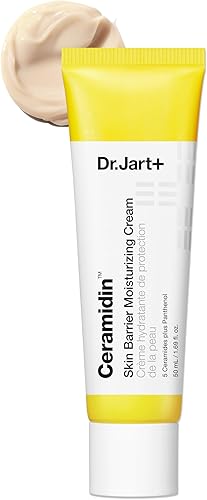
Ceramidin Cream
Dr. Jart+
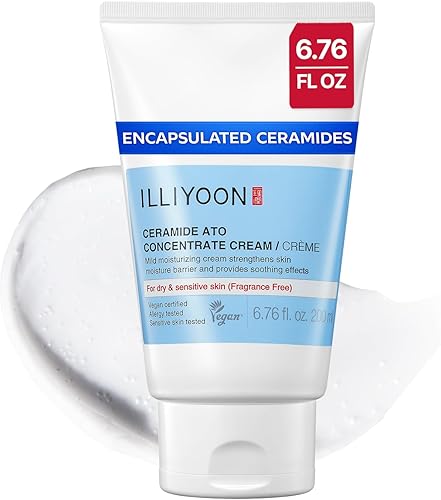
Ceramide Ato Healing Cream
Illiyoon

Ceramide Yuja Bio Cleansing Oil
irecipe
As an Amazon Associate, we earn from qualifying purchases.
Skin types
Dry and dehydrated skin benefits most because ceramide depletion is the direct cause of barrier breakdown and water loss. Sensitive skin gets relief because a repaired barrier reduces contact with irritants that trigger redness and stinging. Oily skin still needs ceramides for barrier health, but lighter formats like gel-creams or emulsions prevent the heaviness of traditional ceramide creams. Aging skin benefits from replacing the ceramides lost with age.
Effective concentrations
Effective ceramide products contain the lipid at 1-5% in the formula, paired with cholesterol and free fatty acids. The 3:1:1 molar ratio of ceramides, cholesterol, and fatty acids (pioneered by Mao-Qiang et al.) matches the skin's natural lipid composition and produces the best barrier repair results. Higher ceramide percentages without the companion lipids are less effective. Look for 'ceramide NP,' 'ceramide AP,' or 'ceramide EOP' in the ingredient list. Pseudo-ceramides used in many K-beauty products (like cetyl-PG hydroxyethyl palmitamide) mimic natural ceramide function at lower cost.
Pairs well with
Hyaluronic acid
Hyaluronic acid pulls water into the epidermis; ceramides seal it there. Apply HA to damp skin first, then layer a ceramide cream on top. This combination addresses both water content and lipid barrier integrity.
Niacinamide
Niacinamide stimulates the skin's own ceramide production by upregulating ceramide synthase. Applying exogenous ceramides plus a niacinamide serum gives both an immediate lipid supply and a longer-term boost to endogenous production.
Centella asiatica
Centella repairs tissue damage and reduces inflammation while ceramides rebuild the lipid barrier. For skin recovering from over-exfoliation, laser treatments, or environmental damage, this pairing covers both structural repair and lipid replenishment.
Common questions
- Do I need ceramides if my skin is oily?
- Yes. Oily skin produces excess sebum, but sebum and ceramides are different lipids with different functions. Sebum sits on the surface and comes from sebaceous glands. Ceramides are structural lipids between dead skin cells in the barrier. You can have plenty of sebum and still have a depleted ceramide layer, especially if you use harsh cleansers, BHA, or retinol regularly. Choose a lightweight ceramide gel-cream or emulsion instead of a rich cream to avoid adding heaviness.
- What is the difference between ceramide NP, AP, and EOP?
- These are naming conventions for different ceramide subclasses based on their molecular structure. Ceramide NP (formerly ceramide 3) is the most common in skincare and restores barrier function broadly. Ceramide AP (formerly ceramide 6-II) promotes normal keratinocyte turnover and is linked to anti-flaking effects. Ceramide EOP (formerly ceramide 1) is a long-chain ceramide that spans multiple lipid layers and provides structural integrity to the barrier. Products with all three cover more of the skin's natural ceramide profile than single-ceramide formulas.
- How quickly do ceramide products repair a damaged barrier?
- Measurable TEWL reduction starts within 24-48 hours of first application. Visible improvements in dryness and flaking typically appear at 1-2 weeks of twice-daily use. Full barrier restoration, confirmed by normalized TEWL readings and restored lipid lamellae, takes 2-4 weeks depending on the severity of the damage. Chamlin et al. saw significant SCORAD improvements in atopic dermatitis patients at 3 weeks.
- Are plant-derived ceramides as effective as synthetic ones?
- Plant ceramides from rice bran, wheat, and konjac are structurally similar to human skin ceramides and do integrate into the lipid barrier. A study by Guillou et al. (2011, European Journal of Dermatology) found that plant-derived ceramides taken orally improved skin hydration, but topical plant ceramides have less direct clinical data than synthetic pseudo-ceramides. Synthetic pseudo-ceramides (like the cetyl-PG hydroxyethyl palmitamide used in many K-beauty products) have more published topical efficacy data. Both work; synthetic versions have a slight edge in available evidence.
- Can ceramides clog pores or cause breakouts?
- Ceramides themselves are non-comedogenic. They are identical to lipids your skin already produces. Breakouts from ceramide products almost always come from the vehicle: heavy butters, coconut oil derivatives, or occlusives high in the formula. If you are breakout-prone, choose a ceramide product in a gel-cream or light emulsion base. Avoid formulas where shea butter, cocoa butter, or isopropyl myristate appear in the top five ingredients.
Find products with Ceramides matched to your skin.
Take the Skin Quiz